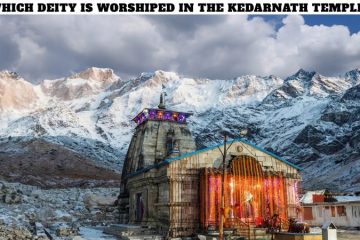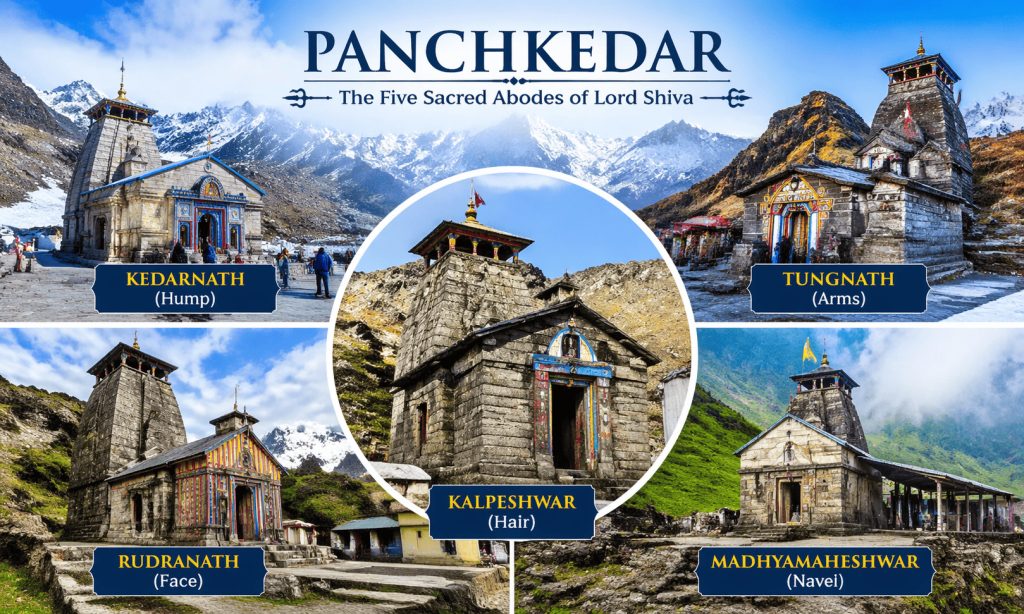
The Panch Kedarnath refers to a group of five sacred temples dedicated to Lord Shiva, located in the majestic Garhwal region of Uttarakhand. These temples—Kedarnath Temple, Tungnath Temple, Rudranath Temple, Madhyamaheshwar Temple, and Kalpeshwar Temple—hold immense spiritual and mythological importance.
We consider this pilgrimage not just a journey through the Himalayas but a transformative spiritual experience that connects devotees with divine energy, ancient legends, and breathtaking natural beauty.
Mythological Significance of Panch Kedarnath
According to Hindu mythology, after the Mahabharata War, the Pandavas sought forgiveness from Lord Shiva for their sins. Shiva, avoiding them, took the form of a bull and disappeared into the Himalayas. His body parts emerged at five different locations, which later became the Panch Kedarnath temples:
- Hump appeared at Kedarnath
- Arms at Tungnath
- Face at Rudranath
- Navel at Madhyamaheshwar
- Hair (Jata) at Kalpeshwar
We observe that each temple symbolizes a unique aspect of Lord Shiva, making the pilgrimage deeply symbolic and spiritually enriching.
Detailed Guide to the Five Kedarnath Temples
1. Kedarnath Temple – The Primary Shrine
Located at an altitude of 3,583 meters, Kedarnath Temple is the most prominent among the five. Nestled near the Mandakini River, it is one of the twelve Jyotirlingas of Lord Shiva.
We recommend visiting this temple as the starting point of the Panch Kedarnath journey due to its accessibility and immense spiritual significance. The trek from Gaurikund to Kedarnath spans approximately 16 km, offering mesmerizing views of snow-clad peaks.
2. Tungnath Temple – The Highest Shiva Temple
Perched at 3,680 meters, Tungnath Temple is the highest Shiva temple in the world. The temple is accessible via a relatively easy 5 km trek from Chopta.
We find Tungnath especially appealing due to its combination of spiritual serenity and panoramic Himalayan landscapes. The trek further extends to Chandrashila peak, offering a breathtaking 360-degree view.
3. Rudranath Temple – The Sacred Face of Shiva
Situated deep within dense forests and alpine meadows, Rudranath Temple is dedicated to the face of Lord Shiva. The trek to Rudranath is one of the most challenging, covering approximately 20 km from Sagar village.
We emphasize this temple for those seeking solitude, devotion, and raw Himalayan beauty. The surroundings include lush greenery, tranquil streams, and sacred kunds.
4. Madhyamaheshwar Temple – The Divine Navel
Located at 3,289 meters, Madhyamaheshwar Temple represents the navel of Lord Shiva. The trek begins from Uniana village and spans about 18 km.
We regard this temple as one of the most serene locations in the Panch Kedarnath circuit, offering peaceful meadows, stunning views of Chaukhamba peaks, and a deeply meditative atmosphere.
5. Kalpeshwar Temple – The Eternal Shrine
Unlike the other four temples, Kalpeshwar Temple remains open throughout the year. Situated at a lower altitude, it is easily accessible via a short trek from Urgam village.
We note that Kalpeshwar is unique because devotees can touch the Shiva lingam, enhancing the personal spiritual experience.
Best Time to Visit Panch Kedarnath
We recommend planning the Panch Kedarnath Yatra between May and October. During this period:
- The weather remains favorable for trekking
- Temples are open for दर्शन
- Roads and routes are accessible
Monsoon months (July–August) should be approached with caution due to landslides, while winters bring heavy snowfall, making most temples inaccessible.
Complete Trekking Route for Panch Kedarnath
We suggest the following sequence for an efficient pilgrimage:
- Kedarnath
- Tungnath
- Rudranath
- Madhyamaheshwar
- Kalpeshwar
This route allows us to gradually adapt to altitude while covering all temples systematically. The journey involves moderate to difficult treks, requiring physical fitness and proper planning.
Travel Tips for Panch Kedarnath Yatra
We strongly advise the following for a safe and fulfilling journey:
- Carry warm clothing and trekking gear
- Maintain physical fitness before starting
- Hire local guides for difficult routes
- Stay hydrated and carry energy food
- Check weather updates regularly
Spiritual Essence of Panch Kedarnath
The Panch Kedarnath Yatra is more than a pilgrimage—it is a journey into the heart of devotion. We experience a profound connection with Lord Shiva’s divine presence, nature’s purity, and inner peace.
Each temple offers a unique spiritual vibration, and completing all five is believed to bring salvation and liberation from sins.
Frequently Asked Questions (FAQs)
1. What is Panch Kedarnath?
Panch Kedarnath refers to five sacred temples dedicated to Lord Shiva in Uttarakhand.
2. Which are the five temples of Panch Kedarnath?
Kedarnath, Tungnath, Rudranath, Madhyamaheshwar, and Kalpeshwar.
3. What is the best time to visit Panch Kedarnath?
May to October is considered ideal.
4. How difficult is the Panch Kedarnath trek?
The trek ranges from moderate to highly challenging, depending on the temple.
5. Is Kedarnath part of Panch Kedarnath?
Yes, it is the most prominent temple among the five.
6. How many days are required for the Panch Kedarnath Yatra?
Typically, 12–16 days are required to complete the journey.
7. Are guides necessary for the trek?
Yes, especially for the Rudranath and Madhyamaheshwar routes.
8. Is Kalpeshwar open throughout the year?
Yes, it is the only temple open year-round.
9. What is the significance of Panch Kedarnath?
It symbolizes different body parts of Lord Shiva.
10. Can beginners attempt the Panch Kedarnath trek?
Yes, with proper preparation and guidance.