The Kumaon region of Uttarakhand, known for its pristine beauty and tranquil hill stations, hosts an enchanting route between two of its most popular destinations: Mukteshwar and Nainital. This journey, while relatively short in terms of mileage, offers a complete transition in experience—moving from Mukteshwar’s quiet, panoramic serenity to Nainital’s vibrant, lake-centric energy. Understanding the Mukteshwar to Nainital distance is the first step in planning a memorable day trip or a swift transition between these two contrasting havens.
1. Defining the Mukteshwar to Nainital Distance
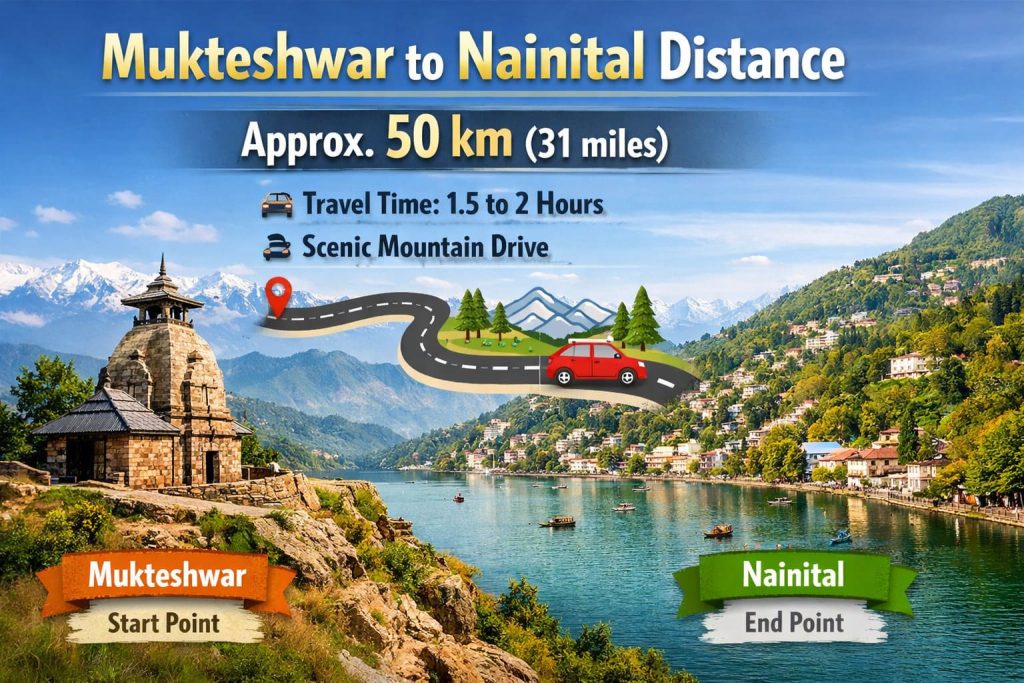
The most crucial fact for any traveler is the core distance between the two towns. Depending on the exact route taken, the road distance from Mukteshwar to Nainital typically falls between 46 kilometers and 53 kilometers (approximately 29 to 33 miles).
While a straight line distance, as measured by air, is significantly shorter (around 21 kilometers), the actual travel is dictated by the winding, serpentine roads inherent to the Himalayan foothills. This compact distance makes the trip easily manageable within a few hours, serving as a perfect day excursion for those staying in either location.
Travel Time Estimation
Due to the hilly terrain, travel time is more dependent on road conditions, traffic, and the number of stopovers than on the pure mileage.
Average Driving Time: In ideal conditions (clear roads, low traffic), the drive typically takes between 1 hour 30 minutes and 2 hours to complete.
Factors Affecting Time: This duration can easily extend during peak tourist season, weekends, or due to adverse weather like heavy monsoon rains or winter snowfall, which can slow down speeds considerably. It is always wise to budget for two hours of travel time to account for the necessary caution on mountain bends.
2. The Two Primary Routes: Ramgarh vs. Bhimtal/Dhanachuli
While the destinations are fixed, travelers often have a choice between two main routes, each offering a distinct flavor of the Kumaon landscape. The choice depends on whether the traveler prioritizes speed or wants to incorporate specific sightseeing stops.
Route A: The Shorter, More Direct Route via Ramgarh (Approx. 46-50 km)
This is generally considered the most direct and fastest way to cover the Mukteshwar to Nainital distance.
Segment | Distance (Approx.) | Key Stopover/Landmark |
|---|---|---|
Mukteshwar to Ramgarh | 22 km | Ramgarh Orchards, Poet Rabindranath Tagore’s connection |
Ramgarh to Bhowali | 16 km | Apple and Peach Orchards, Quiet Hamlet Vibes |
Bhowali to Nainital | 12 km | Gateway to Nainital, Gagar area views |
Total | 50 km (approx.) | Total Driving Time: 1 hour 30 minutes |
Highlights of Route A:
Ramgarh: Often called the “Fruit Bowl of Kumaon,” this area is famous for its extensive orchards of apples, apricots, peaches, and plums. It is an ideal spot for a quick break to enjoy fresh fruit or local jams.
Bhowali: This major junction acts as the gateway to Nainital and the surrounding lake area. It is a good place to refuel or grab a quick meal before the final ascent to the main lake.
Route B: The Scenic Route via Dhanachuli and Bhimtal (Approx. 50-53 km)
This route offers slightly better road quality in some sections and, most importantly, allows for seamless inclusion of the other famous Kumaon lakes without major detours.
Segment | Distance (Approx.) | Key Stopover/Landmark |
|---|---|---|
Mukteshwar to Dhanachuli | 15 km | Highly scenic stretch, lesser-known quiet town |
Dhanachuli to Bhimtal | 20 km | Bhimtal Lake, Bhimeshwara Temple |
Bhimtal to Bhowali | 8 km | Short connector road |
Bhowali to Nainital | 10 km | The final ascent to Naini Lake |
Total | 53 km (approx.) | Total Driving Time: 1 hour 45 minutes to 2 hours |
Highlights of Route B:
Dhanachuli: A serene, upscale hamlet known for spectacular Himalayan views, offering an alternative to Mukteshwar’s busy spots.
Bhimtal: Home to the largest lake in the area, Bhimtal is an unmissable stop. Travelers can enjoy boating, visit the island aquarium, or simply walk along the peaceful periphery. This stop provides a contrast to the high-altitude views of Mukteshwar and the bustling environment of Nainital.
3. Must-See Stopovers and Attractions Along the Way
The journey is as rewarding as the destination. Given the short Mukteshwar to Nainital distance, travelers have ample opportunity to pause and absorb the charm of the intermediate stops.
Chauli Ki Jali (Mukteshwar)
Before even leaving Mukteshwar, Chauli Ki Jali (also known as Chauthi Jali) is a must-visit cliff-side viewpoint located near the Mukteshwar Dham Temple. It offers sheer cliff drops and stunning views of the valley. It is famed for the natural window-like opening in the rock (the ‘jali’) and is a popular spot for adventure activities like rock climbing and rappelling.
Ramgarh: The “Fruit Bowl”
As mentioned in Route A, Ramgarh is an essential stop. The area is steeped in colonial charm and literary history, having been a retreat for writers like Rabindranath Tagore. In season (typically May to July), you can find roadside vendors selling fresh, juicy plums, apricots, and peaches. A stop here offers a chance to sample the agricultural heart of the Kumaon region.
The Lake Trio: Bhimtal, Naukuchiatal, and Sattal
If opting for Route B or willing to take minor detours from Route A around Bhowali, these three lakes are easily accessible:
Bhimtal (Largest Lake): Just 22 km before Nainital, this lake is massive and less crowded than Naini Lake. It features a scenic island aquarium reachable by boat.
Naukuchiatal (Nine-Cornered Lake): Known as the deepest lake in the region, Naukuchiatal is famous for its unique nine-cornered shape (though only three or four are visible from most vantage points). It’s a hub for adventure sports like paragliding and zorbing.
Sattal (Seven Lakes): A cluster of seven interconnected freshwater lakes set amidst dense forests. This spot is a birdwatcher’s paradise and offers a more rustic, serene experience compared to the developed towns.
Incorporating these lake stops turns the simple transition into a full-day lake exploration tour before reaching Nainital.
4. Road Conditions and Best Time to Travel
The quality of the drive is paramount for mountain journeys. Generally, the roads connecting Mukteshwar, Bhowali, and Nainital are well-maintained National Highways (NH109) and state roads.
Road Condition Profile:
Winding Nature: The entire route consists of winding ghat (mountain) roads. While the surfaces are usually smooth, the continuous bends necessitate slow, cautious driving.
Traffic: Traffic can be dense, particularly when approaching Nainital (especially near Tallital and Mall Road) and around the main towns like Bhowali during holiday weekends.
Safety: Always prioritize daylight travel. Driving on these roads after dark is possible but is complicated by low visibility, fog, and the risk of encountering wildlife or slow-moving vehicles.
Best Time to Make the Journey:
The ideal time to travel from Mukteshwar to Nainital is during the Spring (March to June) and Autumn (September to November) months.
Spring/Summer (March – June): The weather is pleasant, and the fruit orchards are in full bloom. The visibility is usually excellent, offering clear views of the distant Himalayan peaks, including the Trishul and Nanda Devi ranges.
Monsoon (July – August): While the landscape is lush green, the risk of minor landslides and road blockages increases. Visibility may also be poor due to heavy fog and rain. Travelers should check local reports before setting out.
Winter (December – February): The weather is cold, and higher reaches of Mukteshwar and the connecting roads can experience light snowfall, making the drive tricky but highly picturesque. Carry adequate warm clothing and check for potential road closures due to snow or frost.
5. Planning the Perfect Day Trip from Mukteshwar
The short mukteshwar to nainital distance makes a one-day round trip highly feasible. Here is a suggested itinerary:
Time | Activity | Location | Note |
|---|---|---|---|
8:00 AM | Depart from Mukteshwar | Mukteshwar | Start early to maximize time in Nainital. |
8:30 AM | Stop for Photography/View | Chauli Ki Jali or a nearby viewpoint | Enjoy the morning glow on the Himalayas. |
9:30 AM | Morning Drive | Mukteshwar to Bhimtal (Route B) | Enjoy the forested drive. |
11:00 AM | Mid-morning Break | Bhimtal or Naukuchiatal | Take a short boat ride or relax by the water. |
12:30 PM | Arrival & Parking | Nainital (Parking lots near Tallital or Mall Road) | Parking can be challenging; consider leaving your vehicle at the outskirts (like Bhowali) and taking a local taxi. |
1:00 PM | Lunch & Lakeside Walk | Mall Road, Nainital | Explore the flat promenade along the lake. |
2:30 PM | Activity | Boating on Naini Lake or Aerial Ropeway | A must-do for panoramic views. |
4:00 PM | Sightseeing | Naina Devi Temple or Tiffin Top (Dorothy’s Seat) | Visit the sacred temple or ascend for excellent views. |
6:00 PM | Departure | Nainital | Head back to Mukteshwar while there is still adequate daylight. |
7:30 PM | Arrival | Mukteshwar | Conclude the round trip. |
Conclusion
The connection between Mukteshwar and Nainital is more than just a road; it’s a scenic passage through the heart of the Kumaon region. The relatively short Mukteshwar to Nainital distance, ranging between 46 and 53 kilometers, allows for easy travel, offering an excellent mix of quiet hill views, lush fruit orchards, and deep blue lakes along the way. Whether you take the Ramgarh route for speed or the Bhimtal route for scenic stopovers, this short journey promises to be a delightful highlight of any Uttarakhand itinerary. Planning for a two-hour transit time will ensure a relaxed and safe experience, allowing you to fully enjoy the transition from the tranquil “Fruit Bowl” to the vibrant “Lake City.”
Frequently Asked Questions (FAQs)
1. What is the exact Mukteshwar to Nainital distance by road?
The road distance is approximately 46 km to 53 km, depending on whether you take the route via Ramgarh or the route via Bhimtal.
2. How long does it take to drive from Mukteshwar to Nainital?
In normal traffic conditions, it takes about 1 hour 30 minutes to 2 hours. During peak tourist seasons or bad weather, it can take up to 3 hours.
3. Is the road from Mukteshwar to Nainital safe for self-driving?
Yes, the roads are generally well-maintained. However, they are winding mountain roads (ghats), so drivers should be experienced with hill driving and remain cautious at sharp bends.
4. Which is the more scenic route between the two?
The route via Dhanachuli and Bhimtal (Route B) is often considered more scenic as it passes through dense forests and offers the chance to see Bhimtal Lake.
5. Are there frequent buses between Mukteshwar and Nainital?
Direct state-run buses are less frequent. Most travelers prefer hiring a private taxi or taking a shared jeep (Maxx) from Mukteshwar to Bhowali, and then another to Nainital.
6. Can I cover the Mukteshwar to Nainital distance and back in a single day?
Absolutely. Because the distance is short, you can leave early in the morning, spend 6-7 hours in Nainital, and return to Mukteshwar by evening.
7. Is the road open during the monsoon season?
The road usually remains open, but the Kumaon region is prone to landslides during heavy rains. It is advisable to check local weather forecasts and road status before traveling in July or August.
8. What are the best places to stop for food during the journey?
Bhowali is a major hub with several local dhabas and cafes. Ramgarh also offers lovely boutique stay cafes that serve fresh local preserves and snacks.
9. Will I see snow on the road during winter?
Mukteshwar receives significant snowfall in January and February. While the roads are usually cleared quickly, you might encounter snow or frost on the road, which requires extra care while driving.
10. Do I need a special permit to drive this route?
No special permits are required for Indian or foreign tourists to travel this route, as it does not pass through restricted border zones.